


Stretch denim has revolutionized the jeans market, offering a level of comfort and fit that consumers love. However, for manufacturers, this high-value material presents a significant challenge in the garment washing stage. The very fibers that provide the stretch—spandex (elastane)—are incredibly delicate. This guide is dedicated to the critical task of protecting elastic fibers during the harsh denim washing process, exploring the causes of damage and introducing the role of a specialized elastic protective agent. For factories producing high-elastic denim, this knowledge is crucial to preventing costly rejects. Discover our professional washing aids designed to safeguard your quality.
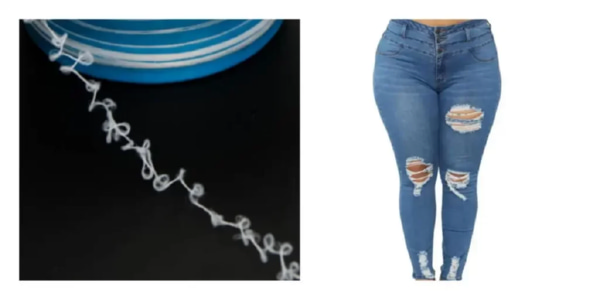
Why do spandex fibers break during washing? The answer lies in the aggressive nature of the denim finishing process. Spandex is highly susceptible to a combination of physical, chemical, and thermal stresses.
The intense tumbling action of industrial washing machines, often with abrasive stones or enzymes, creates immense mechanical stress. The delicate spandex filaments can be snagged, abraded, and eventually ruptured, leading to a loss of elasticity. This is a primary cause of spandex breakage.
The bleaching process, essential for achieving many fashion washes, is notoriously harsh. Chemicals like hypochlorite or permanganate can attack and degrade the polymer structure of spandex, causing it to become brittle and weak. This chemical damage is a major contributor to fabric failure.
Spandex is sensitive to heat. The thermal degradation that occurs at the high temperatures used in some washing and drying cycles can cause the fibers to lose their elastic recovery properties, resulting in a garment that sags and loses its shape.
To combat these multi-faceted threats, a specialized chemical solution is required. An elastic protective agent is a multi-functional washing aid designed to act as a guardian for spandex fibers throughout the entire wash cycle.
The primary mechanism of an elastic protective agent is the formation of a micro-thin, durable lubricating film over the fiber surfaces. This film drastically reduces friction, allowing the cotton and spandex fibers to glide past each other and machine surfaces without snagging or abrasion.

This protective layer also acts as a buffer, shielding the spandex from direct attack by harsh chemicals during bleaching. It can also help to dissipate heat, providing a degree of protection against thermal degradation.
At Taiyang Chemical, we developed TY-8801 Elastic Protective Agent specifically to solve the problem of spandex breakage in demanding denim washing environments.
TY-8801 is engineered to provide robust protection. Its primary benefit is the effective prevention of spandex breakage and another common issue known as "blistering," where the elastic fibers rupture just below the fabric surface.
A crucial advantage of TY-8801 is that it does its job without leaving its mark. It will not affect the final hand feel or the color of the fabric. This ensures that your creative wash effects and desired softness are perfectly preserved.
For comprehensive protection, TY-8801 should be used at every critical stage of the washing process. Here is a reference dosage for a 150-pair machine load:
For the best results, pair your elastic protective agent with smart process controls.
Always keep temperatures as low as possible when washing stretch fabrics. Avoid exceeding 60°C during whitening steps. This is the single most important factor in preventing thermal degradation.
When using TY-8801 during the bleaching step, it is important to manage your pH levels. As our product data suggests, using caustic soda to adjust the pH to 10-12 helps optimize the protective effect in this harsh chemical environment. To discuss your specific process, feel free to contact our technical team.
Producing high-quality, durable stretch denim is a mark of excellence in garment washing. The key to success lies in protecting elastic fibers from the very first step. By incorporating a professional elastic protective agent like TY-8801 into your process, you can dramatically reduce rejects, ensure consistent quality, and deliver a product that consumers can trust for its lasting comfort and fit.
Stop risking your most valuable denim batches. Learn more about TY-8801 Elastic Protective Agent and safeguard your production today.
What is the main cause of spandex "blistering" or "bubbling" on denim? What is spandex blistering? "Blistering" is a form of spandex breakage where the elastic fibers rupture just under the surface of the denim. It is typically caused by a combination of chemical attack (often from bleach) and high temperature, which weakens the fiber to the point of failure.
Can I use a standard softener instead of a dedicated elastic protective agent? Can I use a softener instead of a protective agent? No. While a softener can reduce some friction, it is not designed to withstand the harsh chemical and thermal conditions of the full denim washing cycle. A dedicated elastic protective agent like TY-8801 is specifically formulated to provide robust protection during desizing, grinding, and bleaching.
Does TY-8801 work on other elastic fabrics besides denim, like nylon blends? Does it work on other elastic fabrics? Yes. According to our product data, TY-8801 is highly effective for a range of spandex-containing fabrics, including high-elastic colored fabrics and spandex/nylon blends, making it a versatile tool for any factory handling stretch materials.
Will this product leave any residue on the fabric after washing? No. TY-8801 is designed to provide protection during the wet process and be washed out completely during the final rinsing steps. It will not leave any residue that would affect the final hand feel or appearance of the garment. To confirm this for your specific process, you can always request a sample for testing.