

If you work with polyester dyeing, you've likely encountered the infamous "white powder" problem. This stubborn residue can build up inside your machines, contaminate your dyebath, and even cause defects on your fabric. This is one of the most persistent polyester dyeing problems, and its cause is oligomers. This practical guide will explain everything you need to know about oligomer removal from polyester, from what they are to how to control them effectively with the right dyeing auxiliaries. For a cleaner, more efficient process, it's time to tackle oligomers head-on. Explore our specialized solutions for polyester dyeing.
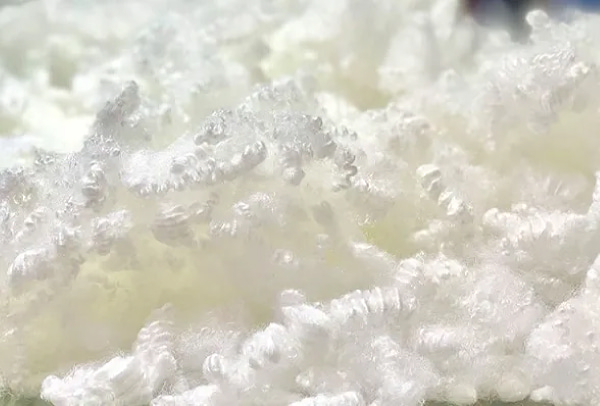
What are oligomers? To solve the problem, we first need to understand it. Oligomers are low-molecular-weight polymers that are a natural part of the polyester fiber itself.
During the manufacturing of polyester (polyethylene terephthalate), some small polymer chains are formed. These are the oligomers. They are not an impurity but an inherent component of the fiber. They are solid, crystalline, and insoluble in water.
At room temperature, oligomers are stable inside the fiber. However, during the high temperatures of polyester dyeing (typically above 120°C), they begin to migrate out of the fiber and into the dyebath. As the bath cools, these oligomers precipitate, forming the notorious white, chalky powder.
This white powder is more than just an annoyance; it's a major source of production issues:
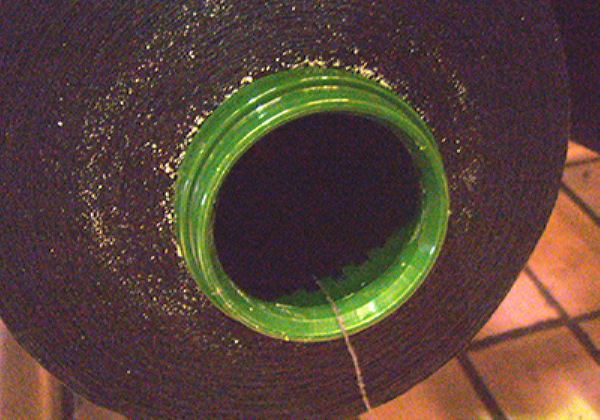
Can I remove oligomers just by cleaning the machine after dyeing? While regular dye bath cleaning is important, a proactive approach is far more effective. A specialized oligomer remover added to the dyebath tackles the problem at its source.
A high-quality oligomer remover is formulated with special surfactants that have a high affinity for oligomer molecules. They "latch onto" the oligomers as they leach from the fiber, keeping them soluble and preventing them from precipitating as the dyebath cools.
In addition to keeping oligomers soluble, these agents have excellent dispersing power. They keep any oligomer particles that do form suspended evenly in the water. This prevents their adhesion to the fabric and to machine surfaces, ensuring they are washed away cleanly during rinsing.
To provide a powerful and reliable solution, Taiyang Chemical has developed TY2-56 Oligomer Remover. This product is your key to a clean process and is one of the most essential dyeing auxiliaries for any modern polyester dye house.
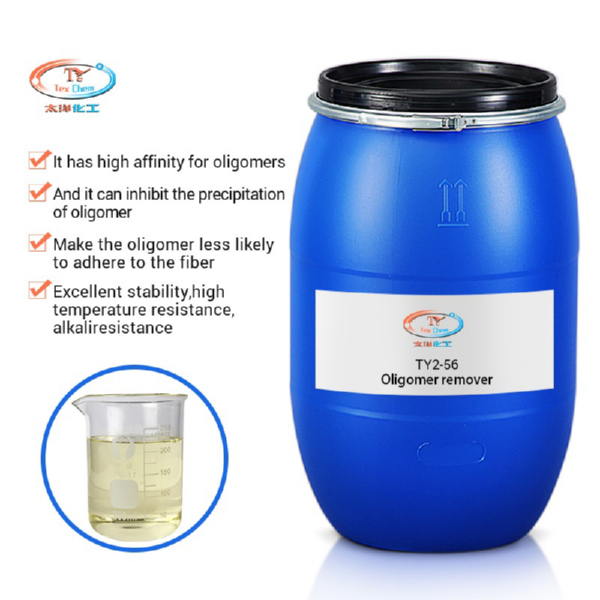
TY2-56 excels due to its purpose-built formulation. It offers:
The best strategy for oligomer removal from polyester is prevention. TY2-56 is designed to be used directly in the dye bath along with your dyes and other auxiliaries. This proactive approach stops the problem before it starts, saving you the time and expense of dealing with equipment contamination later.
Using TY2-56 is simple.
For the best results, combine the use of an oligomer remover with good dye house practices.
Even with an effective in-bath remover, periodic, thorough dye bath cleaning is essential to remove any long-term buildup and keep your machines running at peak efficiency.
Some disperse dyes are more prone to creating issues with oligomers than others. Working with a knowledgeable chemical supplier who can recommend a compatible system of dyes and auxiliaries is a major advantage. To discuss your needs, you can request a technical consultation with our team.
Oligomers are an unavoidable part of polyester dyeing, but the problems they cause are not. By understanding their origin and implementing a proactive control strategy with a high-performance oligomer remover like TY2-56, you can prevent dye spots, reduce machine downtime, and produce higher-quality fabrics. It's a critical step toward achieving a trouble-free and more profitable dyeing operation.
Stop letting oligomer buildup disrupt your production and compromise your quality. Learn more about TY2-56 Oligomer Remover and request a technical consultation today.
While regular dye bath cleaning is crucial for maintenance, it is a reactive measure. An in-bath oligomer remover is a proactive measure that prevents the problem from occurring in the first place, saving you from contaminated fabric and the downtime associated with frequent, harsh cleaning.
Does it affect the final shade? No. TY2-56 is formulated to be non-ionic/anionic and does not interfere with the dye or the dyeing process. It will not affect the final color shade or the fastness properties of your dyed fabric.
What is the difference between an oligomer remover and a dispersing agent? While both have dispersing properties, a standard dispersing agent is primarily designed to keep dye molecules separated. An oligomer remover like TY2-56 has special surfactants with a high affinity specifically for polyester oligomers, making it far more effective at preventing their precipitation and adhesion.
Yes, absolutely. Oligomer removal from polyester is especially critical in package dyeing of yarns, as the buildup can clog the package and lead to severe unleveled dyeing. TY2-56 is highly recommended for this application to ensure clean machinery and perfectly dyed yarn. To find the right solution for your yarn dyeing, contact our experts.