

When you slip on your favorite pair of perfectly soft, faded jeans, you're experiencing the result of a sophisticated finishing process. For years, achieving this look meant subjecting denim to harsh physical abrasion. Today, a smarter, gentler, and more sustainable technology is leading the way: enzyme washing. This guide will explore the power of the textile enzyme, explaining the science behind bio-washing and how it creates superior fabric finishes. For manufacturers looking to innovate, this is a technology that delivers on both quality and sustainability. Discover the future of finishing by exploring our advanced enzyme solutions.
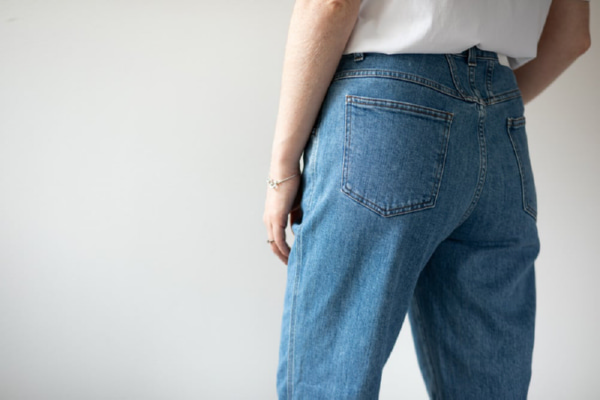
What is enzyme washing? Enzyme washing, also known as bio-washing, is a textile finishing process that uses enzymes to alter a fabric's surface, hand feel, and appearance. It's a form of biocatalysis that offers a high degree of control and precision.
The most common type of enzyme used for fabrics like cotton and denim is cellulase enzyme. These specialized proteins are designed to target and hydrolyze (break down) the cellulose fibers on the surface of the yarn. By gently removing these microscopic surface fibrils, the process dramatically improves the fabric's properties.
For decades, the industry standard for softening and aging denim was stone washing, a process that involves tumbling garments with pumice stones. Here's how enzyme washing compares:
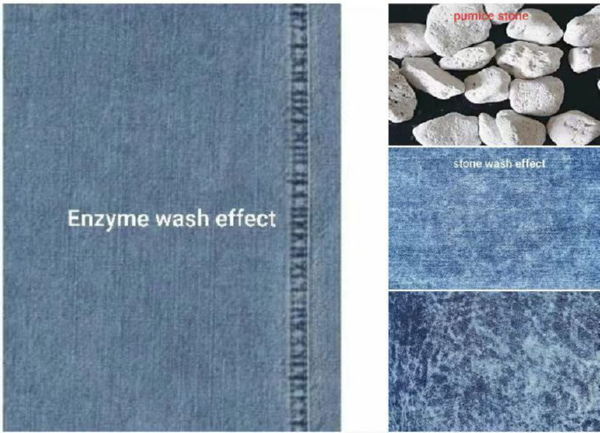
The beauty of bio-washing lies in its "gentle yet powerful" nature. It can achieve significant changes in the fabric's look and feel without compromising its structural integrity, making it the preferred method for modern denim washing and finishing.
Integrating a textile enzyme into your finishing line offers a multitude of benefits that enhance product quality and appeal to conscious consumers.
The primary benefit is a dramatic improvement in softness. By removing the stiff, fuzzy surface fibers, the fabric becomes exceptionally soft and smooth, resulting in a premium hand feel. This makes it an excellent alternative to, or partner for, a traditional fabric softener.
The enzymatic action is perfect for de-pilling and removing surface hairiness. This gives the fabric a cleaner, more refined appearance and improves its resistance to pilling after repeated wear and washing.
In denim washing, cellulase enzyme products are masters of creating authentic-looking finishes. They gently remove some of the surface indigo dye, creating the beautiful contrast and vintage looks that consumers demand, but with much greater control than stone washing.
How is enzyme washing more eco-friendly? It is an inherently sustainable process. Enzymes are biodegradable, work in milder temperature and pH conditions (saving energy), and the process eliminates the sludge and waste associated with pumice stones.
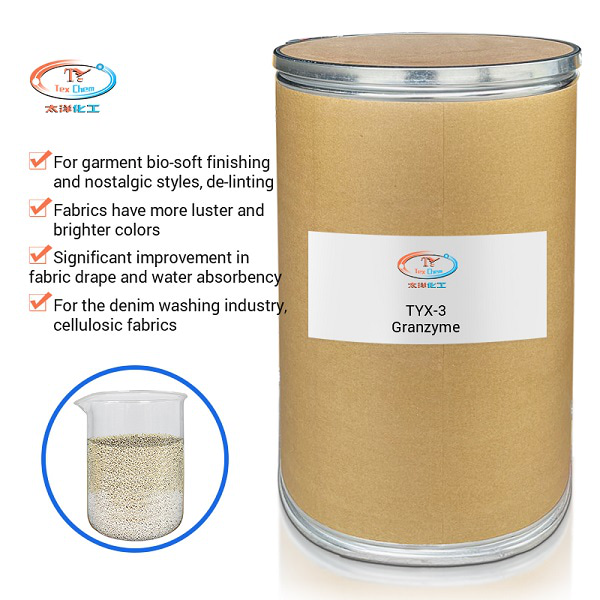
To provide our clients with a reliable, high-performance solution, Taiyang Chemical offers TYX-3 Granzyme, a new-generation cellulase enzyme.
TYX-3 is a multi-component, green bio-enzyme catalyst. Its advanced, genetically modified formulation ensures high efficiency and consistent performance, making it a powerful tool for a variety of finishing applications.
While perfect for denim, the application of TYX-3 extends to a wide range of cellulose fibers. It is highly effective on cotton, linen, ramie, and modern eco-friendly fibers like Tencel and Modal, enhancing their natural softness and drape.
TYX-3 is designed for easy integration into industrial washing machines.
To get the most out of your textile enzyme, precise process control is key.
Enzymes are highly sensitive to their environment. Operating within the recommended pH and temperature ranges is critical to ensure maximum activity and achieve the desired effect.
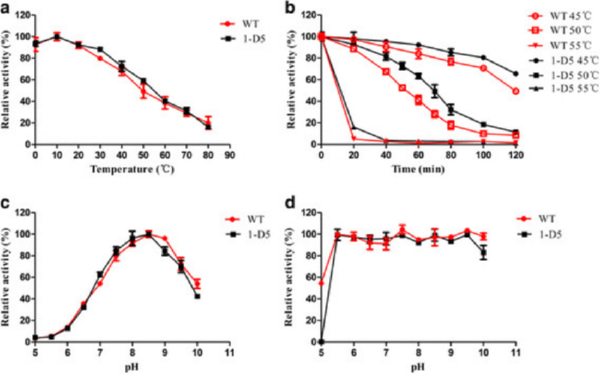
Unlike a simple chemical process, an enzyme reaction must be actively stopped. This inactivation step is crucial. This is typically done by raising the pH to 10 and the temperature to 80°C for 10 minutes, which denatures the enzyme and halts its action, locking in the desired finish. This is a critical detail that an experienced textile chemical supplier can provide guidance on.
Enzyme washing represents the future of sustainable and high-quality textile finishing. It offers a powerful combination of superior performance, process control, and environmental responsibility. By embracing the power of bio-washing with an advanced textile enzyme like TYX-3, manufacturers can create softer, more beautiful, and more valuable garments that meet the demands of the modern market.
Ready to transform your fabrics with the power of biotechnology? Explore the details of TYX-3 Granzyme and contact us for a sample to start your trial.
Does enzyme washing damage the fabric? When used correctly, enzyme washing is much gentler than stone washing. The enzymatic action is primarily on the surface fibrils. While there can be a very slight loss in tensile strength, it is minimal and well within acceptable industry standards, preserving the fabric's core integrity.
Yes. A cellulase enzyme like TYX-3 is effective on all cellulose fibers, which includes cotton, linen, ramie, Tencel, and Modal. However, the optimal dosage and processing time may vary slightly between fabric types, so lab trials are always recommended.
When stored properly in its original packaging at room temperature, TYX-3 has a shelf life of 6 months. It's important to keep it in a clean, covered, and suitable container to maintain its activity.
Enzyme washing is more eco-friendly in several ways: it eliminates the mining and transportation of pumice stones, prevents pumice dust pollution, creates no stone sludge waste, and typically requires less water and energy due to milder processing conditions. To learn more about our commitment to sustainability, feel free to contact us.