

In the journey of transforming raw cloth into finished textiles, the textile pretreatment stage is foundational. A flawless pretreatment ensures the success of all subsequent processes. However, a stubborn obstacle often stands in the way: paraffin wax. This guide provides a deep dive into the challenge of removing wax stains from fabric, explaining why it's a critical problem and how a specialized paraffin remover can be your most effective solution. For those struggling with this issue, achieving a perfect, wax-free surface is now simpler than ever. Discover our advanced pretreatment auxiliaries to start with a clean slate.
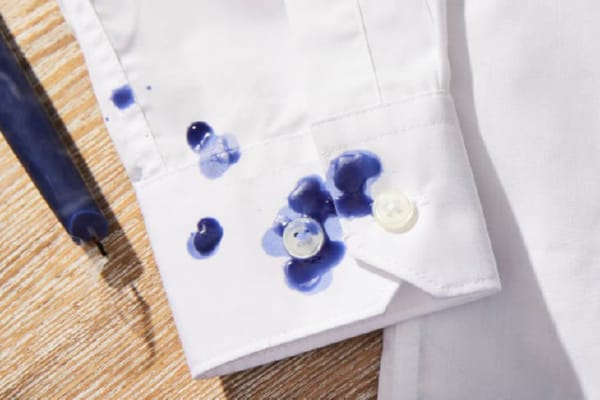
Why are wax stains a problem in textile pretreatment? Paraffin wax is commonly used in weaving to lubricate and strengthen yarns, but if not completely removed, it can cause a cascade of expensive and often irreversible defects.
Wax is inherently hydrophobic, meaning it repels water. Since most dyeing and finishing processes are water-based, any residual wax on the fabric acts as a physical barrier. This prevents dyes and chemicals from penetrating the fibers evenly, resulting in serious defects like color spots, streaks, and uneven finishing.
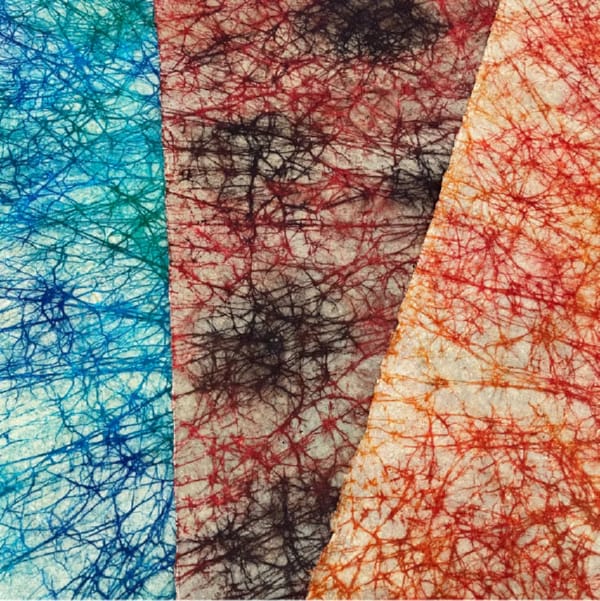
This problem is particularly acute for T/C fabrics (polyester/cotton blends). The polyester component has a high affinity for oily substances like paraffin, making the wax more difficult to remove than from 100% cotton. This makes a specialized textile wax remover essential for these popular materials.
Can I use a standard scouring agent for wax? While a standard scouring process is excellent for removing natural oils and dirt, it is often ineffective against heavy paraffin wax deposits. Traditional detergents lack the specific emulsifying power to break down and lift these stubborn, man-made waxes from the fiber surface.
The key to effective wax removal lies in a specific chemical action: emulsification. A high-quality paraffin remover is essentially a powerful, targeted emulsifier. How does a paraffin remover work?
The specialized surfactants in a paraffin remover work to break down the large, solid wax particles on the fabric into microscopic droplets. They then surround these droplets, forming stable spheres called micelles. This process is known as emulsification.
Once encapsulated in micelles, the wax is no longer hydrophobic. It becomes suspended in the wash water and can be easily and completely rinsed away, leaving behind a perfectly clean, absorbent fabric surface ready for the next stage.
To make this process as efficient and simple as possible, Taiyang Chemical has developed TY1-23 Paraffin Remover. This product is designed to simplify your fabric cleaning workflow while delivering superior results.
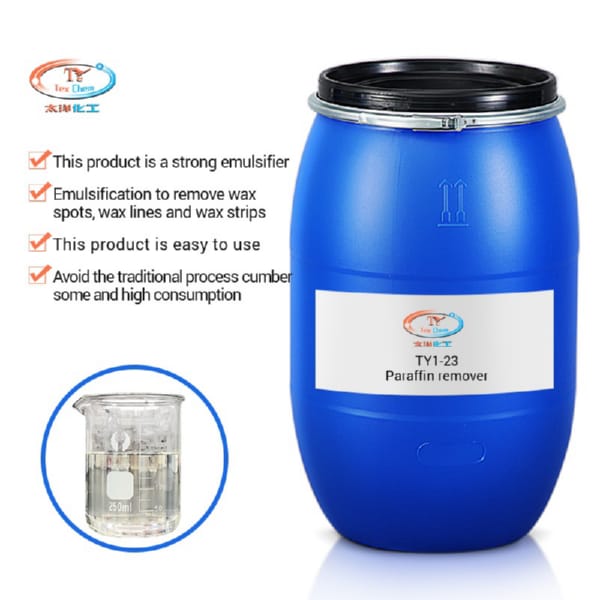
TY1-23 is a potent emulsifier that targets paraffin wax, wax spots, and wax lines. Its primary benefit is providing a clean, fresh, and uniformly prepared fabric, which is the cornerstone of a high-quality final product. It ensures a clean finish from the very beginning.
The simple application of TY1-23 avoids complex, multi-stage procedures. The process is straightforward:
This streamlined method replaces traditional, high-consumption processes that often require high temperatures and multiple baths. With TY1-23, you achieve better results with less effort, saving time, energy, and resources. To get a quote for a paraffin remover in bulk, contact our sales team.
To maximize the effectiveness of your wax removal process, consider these expert tips.
Not all fabrics are the same. The amount of wax can vary significantly. It is crucial to adjust the dosage of your paraffin remover based on the level of wax contamination. Heavier deposits will require a higher concentration for complete removal.
Following the recommended drying and curing temperature guidelines is essential. The heat helps to soften the wax, allowing the emulsifier to penetrate and work more effectively, ensuring a thorough and complete removal.
Removing wax stains from fabric is a critical step in textile pretreatment that should not be overlooked. While a daunting task with traditional methods, a specialized paraffin remover like TY1-23 makes the process simple, efficient, and highly effective. By starting with a perfectly clean, wax-free foundation, you set the stage for flawless dyeing and finishing, ensuring the highest quality for your final product.
Ensure your dyeing and finishing processes start on a perfect, wax-free foundation. Get the technical specifications for TY1-23 Paraffin Remover or request a bulk paraffin remover quote today.
Can I use a standard scouring agent for removing paraffin wax? While a standard scouring agent can remove some surface oils, it is generally not effective for heavy paraffin wax. A specialized paraffin remover contains powerful emulsifiers specifically designed to break down and remove these stubborn, synthetic waxes.
Does TY1-23 Paraffin Remover work on all types of wax? TY1-23 is specifically formulated and highly effective against paraffin waxes, which are the most common type used in weaving. For other specific types of waxes or lubricants, it is always best to conduct a lab trial.
What happens if I don't remove the wax properly before dyeing? What happens if I don't remove wax properly? Incomplete wax removal is a primary cause of major dyeing defects. You will likely see light spots, dark spots, blotches, or a "cloudy" appearance in your dyed fabric, as the dye will be unable to penetrate the waxy areas. This often results in the entire batch being rejected.
Is the padding application method the only way to use this product? The padding method is the most efficient and recommended application for TY1-23 as it ensures uniform application across the entire fabric surface. For specific or unusual production setups, please consult with our technical team to discuss alternative application possibilities.