

From high-performance outdoor jackets to everyday workwear, the demand for fabric waterproofing is universal. For years, the industry has balanced the need for performance with growing environmental concerns. This has led to the rise of a new standard in durable water repellency: the C6 water repellent. This guide will explain what C6 technology is, why it's a more sustainable choice, and how it delivers the high performance your products need. For brands committed to both quality and responsibility, understanding this technology is essential. Discover the future of eco-friendly finishing with our advanced chemical solutions.
To understand the importance of C6, we must first look at its predecessor. The history of high-performance water repellents is a story of chemical evolution.
For decades, C8 technology was the gold standard for durable water repellency. Based on long-chain (8-carbon) fluorocarbons, it offered unmatched performance. However, these long chains were found to break down into persistent environmental contaminants, most notably PFOA (Perfluorooctanoic acid), which bioaccumulate and pose long-term risks.
What is C6 water repellent? In response to the environmental concerns of C8, the chemical industry developed short-chain chemistry. A C6 water repellent is based on 6-carbon fluorocarbon chains. These shorter chains are physically incapable of breaking down into PFOA, immediately eliminating the most significant environmental risk of the older technology.
The shorter chain length of C6 chemistry also means it breaks down much faster in the environment. Based on industry studies, C6 chemistry shows a 40% faster degradation rate compared to C8. This significantly reduces its potential ecological footprint, making it a far more responsible choice for modern eco-friendly finishing.
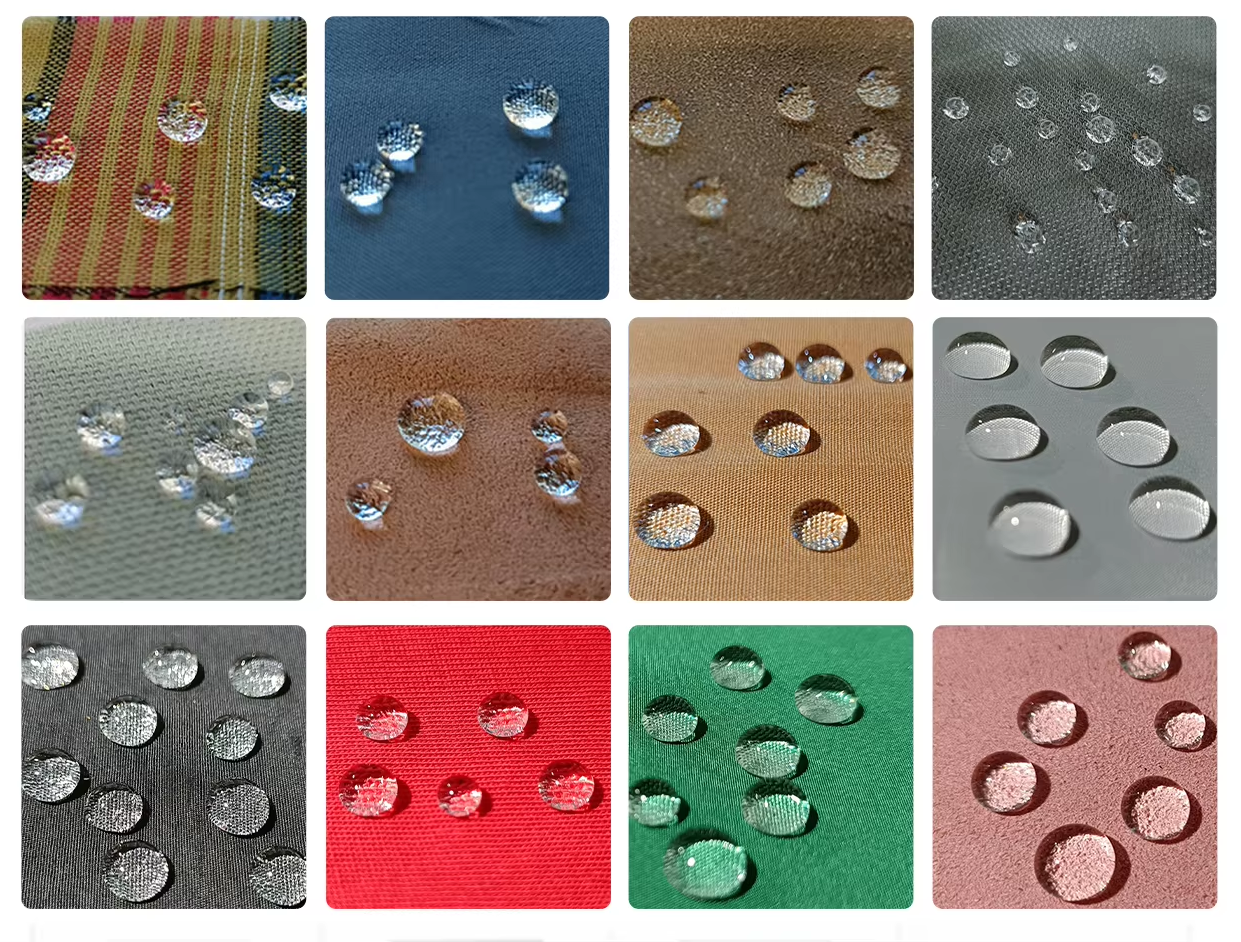
The shift to C6 technology is not a compromise. It represents a major step forward where high performance and sustainability go hand-in-hand. A well-formulated C6 water repellent delivers the results that brands and consumers expect.
A common question is whether the shorter chain can perform as well. The answer is a definitive yes. Modern C6 formulations can achieve an excellent waterproof rating of Grade 5 (based on the ISO 4920 spray test), meaning water beads up and rolls off the surface perfectly.
A water repellent finish is only useful if it lasts. C6 technology provides excellent durability. A properly applied C6 finish can withstand over 30 home laundry cycles while maintaining a high level of performance. This makes it a true Durable Water Repellent (DWR).
A major advantage of C6 fabric waterproofing is its ability to deliver performance without negatively impacting the fabric's natural characteristics. Unlike some heavy coatings, a C6 finish maintains the original softness and breathability of the textile, which is critical for apparel.
Applying a C6 water repellent is a standard fabric finishing procedure that integrates easily into most production lines.
The most common method is the padding process.
Achieving the best results depends on controlling key process parameters. Factors like the wet pick-up percentage during padding and the precise curing temperature and time are critical for ensuring maximum performance and durability. A knowledgeable chemical partner like Taiyang Chemical can provide expert guidance on process optimization.
Adopting C6 technology is not just a technical decision; it's a strategic business move.
Major brands and regions around the world have restricted or banned the use of long-chain C8 chemistry. Using a C6 water repellent ensures your products are compliant and have access to the global market.
Today's consumers are savvy. They actively seek out brands that demonstrate a commitment to sustainability. Using a more eco-friendly finishing technology like C6 is a powerful story that can build brand loyalty and trust.
The C6 water repellent has firmly established itself as the new industry standard for durable water repellent finishes. It offers a powerful combination of high performance, excellent durability, and a vastly improved environmental profile. For any brand or manufacturer creating performance textiles, it is the clear and responsible choice.
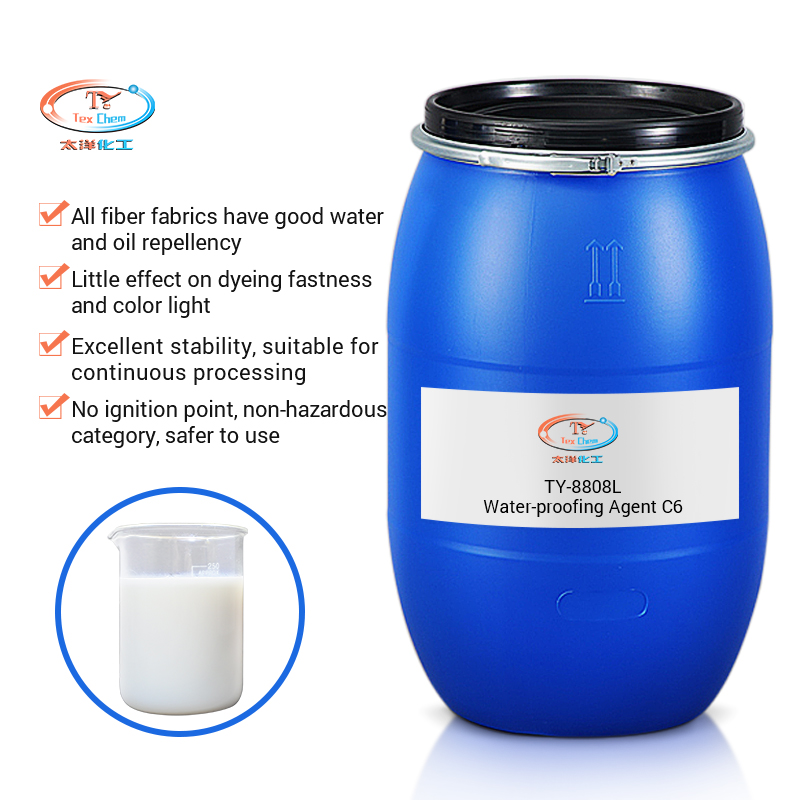
Ready to upgrade your fabrics with a high-performance, eco-friendly waterproofing solution? Contact Taiyang Chemical to learn more about our C6 water repellent offerings and get a technical consultation.
What's the difference between "water-repellent" and "waterproof"?
"Water-repellent" (or DWR) is a finish that causes water to bead up and roll off the surface. It resists wetting but is still breathable. "Waterproof" typically refers to a fabric that provides a complete barrier to water (like a membrane), which may not be breathable. *C6 water repellent creates a water-repellent finish.
Is C6 technology completely free of fluorine?
Is C6 technology fluorine-free? No. C6 is a *fluorocarbon chemistry, which is what gives it its high level of performance and durability. It is "PFOA-free" and short-chain, making it much more environmentally friendly than C8. Fluorine-free water repellents are another, even greener, category, though they may offer different levels of performance and durability.
How does the cost of C6 water repellent compare to C8?
The market has largely shifted to C6, making it the new standard. As such, the cost is highly competitive and is widely accepted as the baseline for high-performance DWR finishes. The cost of not using a compliant chemistry (in terms of market access and brand risk) is far higher.
Can C6 water repellent be applied to all types of fabrics?
C6 chemistry is highly versatile and can be formulated for excellent performance on a wide range of fabrics, including synthetics like polyester and nylon, as well as natural fibers and blends. For specific applications, it's always best to consult with a technical expert.